












A field-ready checklist for Fox Valley and Chicagoland contractors.
The phones don't ring evenly all year. They ring all at once.
The first warm stretch pulls every dormant AC out of hibernation. A lot of those systems aren't going to start cleanly. Coils packed with leaf litter. Capacitors that drifted over the winter. Drain lines full of algae. Filters two seasons past due.
That first cooling call is the most important call of your year. Get it right and the customer doesn't see you again until October. Miss one step and you're back out next Saturday.
This is the spring startup checklist we walk through with the contractors who pick up at our Aurora and Addison counters. It's organized the way a service call actually runs. What's on the truck before you roll. What you check in order. What you leave with the customer so they're not calling next week.
Before the truck rolls: stock the bag
A spring startup is a parts-light call when it goes right. It gets parts-heavy fast when it doesn't. The cost of a second trip back to the supply house almost always beats the cost of carrying the right consumables on the truck.
Here's what we'd put in the bag for the first 30 days of cooling season:
- Filters in your customers' most common sizes. 3M Filtrete media in 1-inch, 4-inch and 5-inch depths covers most residential calls.
- Run capacitors in the microfarad ranges that match the equipment you service most. A drift over 6% off rated value on a dual-run cap is a planned failure waiting for the first 90 degree Saturday.
- Contactors in 24V coils, 30 amp and 40 amp, single and double pole.
- Condensate gear: DiversiTech condensate pumps, drain pans, drain tabs, float switches and a clean length of 3/4-inch PVC.
- Refrigerant: R-410A for legacy service work and R-454B for any A2L equipment. R-410A is still serviceable. Supply is tight. Call ahead before a high-volume day if you're charging multiple systems.
- A2L leak detector rated for R-454B and R-32. Required on A2L install verification. Worth carrying on service calls where the indoor coil is in a tight space.
- A clean set of gauges or a digital manifold, vacuum pump sized for the system, scale and core removal tools.
If anything on that list isn't on your truck this morning, it can be in your hands by lunch. Call the counter at Aurora or Addison. We'll have it pulled and waiting.
Step 1: Cut power, then wait
Pull the outdoor disconnect. Confirm power is off at the air handler.
If the system has a crankcase heater on the compressor and it's been off all winter, that heater needs hours to drive refrigerant out of the oil before the compressor starts under load. Most OEMs spec at least a 24-hour energize window before first start. Confirm against the service manual for the unit you're working on.
Skipping this is one of the most common preventable causes of a first-startup compressor failure.
If the customer flipped the breaker for the outdoor unit at the end of last season, restore power at the breaker and walk the rest of the checklist while the heater catches up.
Step 2: Outdoor unit walk-around
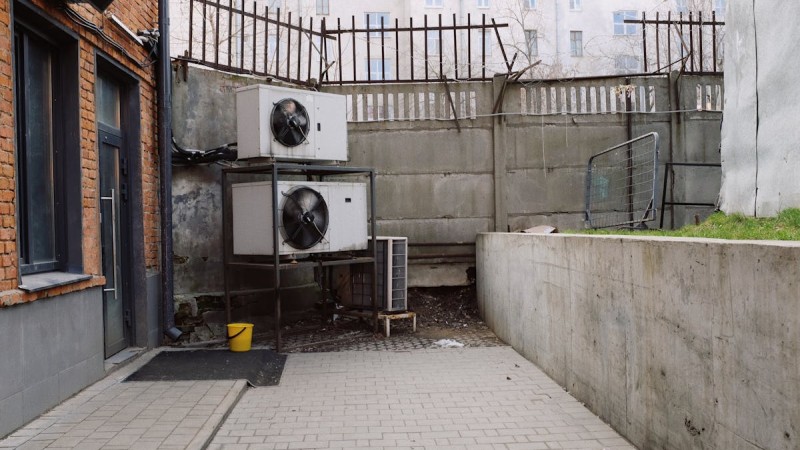
Most of what kills a condenser over winter is mechanical, not electrical. Work the unit clockwise.
- Clear debris. Leaf litter. Mulch creep. Dryer-vent lint that drifted across the yard. Branches from the March storm. Two feet of clearance on every side. Three feet up.
- Inspect the fins. Bent fins from hail or a weed whacker reduce coil capacity. A fin comb is cheap. It pays for itself the first call you use it on.
- Rinse the coil. Pull the top. Rinse from the inside of the coil outward with a garden hose. Never a pressure washer. If the coil is heavily fouled, a no-rinse coil cleaner finishes the job.
- Check the condenser fan blade. A bent blade from winter ice load throws the motor bearings. That cooks the run capacitor inside two weeks of cycling.
- Inspect the disconnect, whip and line set insulation. UV and rodents both eat line set jacket. Replace any sections where the foam is cracked or missing.
Step 3: Air handler and blower
Inside the equipment cabinet:
- Swap the filter. Always. Even if it looks clean. A media filter installed last fall has been pulling air through it all winter on the heat side. A restricted return is the root cause of a lot of "low refrigerant" callbacks. Bring two. Leave one in the customer's spare-filter slot.
- Inspect the blower wheel. A wheel coated in dust loses CFM, raises static pressure and starves the evaporator coil. Brush-clean if buildup is more than light film.
- Check blower motor amp draw against nameplate. A motor pulling near full load amps cold is a motor that won't survive August.
- Walk the supply and return plenums for hand-felt leaks at takeoffs. If duct integrity is the issue, quote the repair on the same call. This is where Long Supply's CL Ward sheet metal earns its keep. We can spin up custom takeoffs and transitions out of either branch faster than ordering and waiting on stock fittings.
Step 4: Condensate system
A flooded drain pan is the single most common cause of a "no cool" callback in June. It's almost always preventable in May.
- Flush the drain line. Push water through with a wet/dry vac on the outlet side first to clear the trap. Then pour a half-gallon of warm water down the line and confirm free flow.
- Drop a treatment tab in the pan. DiversiTech and other manufacturers offer slow-release tabs that suppress algae and slime through the cooling season. Cheap insurance.
- Test the float switch. Lift the float. Confirm the system drops out. If the float is sticky, swap it.
- On systems with a condensate pump, confirm pump operation, check the check-valve and clear the reservoir. DiversiTech pumps are the workhorses here. If the pump is more than five seasons old and serving a critical drain, recommend replacement before it fails on the customer at 6 PM.
Step 5: Electrical
This is where most preventable failures live.
- Capacitor microfarad check. Discharge first. Then read. A dual-run cap rated 45/5 microfarads that's reading 41/4.2 is on the way out. Replace anything more than 6% off rated value. Replace it with a brand and rating you know, not whatever was in the truck last August.
- Contactor inspection. Pitting on the contacts. Chatter on pull-in. Visible carbon. Any of those means swap. A $20 contactor prevents a $300 compressor lockout call.
- Tighten lugs and wire nuts. Thermal cycling loosens connections. Loose connections cause voltage drop. Voltage drop kills compressors.
- Confirm the equipment ground. Especially on older systems where the ground may have been compromised at the disconnect.
Step 6: Refrigerant circuit
Don't skip the ambient gate. Most manufacturers want at least 60 degrees outside before the pressures tell you what you think they're telling you. Below that the readings lie. Confirm the specific ambient threshold for the equipment you're servicing. Some OEMs spec 65 degrees or a controlled head-pressure test.
- Take pressures at the service valves. Calculate subcool on TXV systems or superheat on fixed-orifice. Compare against the manufacturer chart for the equipment.
- If charge is off, leak-search before you add. Adding refrigerant to a leaking system is a 30-day repeat call.
- On A2L systems (R-454B, R-32), verify the leak detector circuit. The detector should de-energize the compressor and force the indoor blower to 100% if a leak is sensed. Specs per UL 60335-2-89 4th Edition.
- Tighten any flare or core connections that show oil weeping. A weeping flare today is a hard leak in July.
Step 7: Test run and customer handoff
Restore power. Set the thermostat to cool. Then:
- Confirm the compressor pulls in cleanly without chatter.
- Confirm condenser fan rotation and indoor blower CFM.
- Watch the temperature split across the evaporator. Most residential systems target somewhere in the 18 to 22 degree range at design conditions, but read the equipment manual for the unit-specific number.
- Confirm condensate flow at the drain termination.
- Listen and smell for anything unusual on the first 10 minutes of run time.
When you walk the customer out, leave them with three things:
- A written summary of what you checked and what you replaced.
- A spare filter in the size they use.
- A reason to call you in October. A maintenance agreement renewal. A fall heating tune-up. A card on the equipment. The spring call is the easiest moment of the year to lock in the next two visits.
Common upsells that actually serve the customer
Spring startup is the right moment to surface options that aren't pressure sells.
- Standing filter order. A subscription removes the most-common cause of preventable callbacks and gives the customer a fixed cost they can plan against.
- IAQ accessory. Media-filter cabinets, UV and high-MERV options matter to homeowners who got religion about indoor air quality and never acted on it. 3M has several lines that mix into existing return plenums cleanly.
- Surge protector for the outdoor unit. A hundred bucks of hardware that protects five thousand dollars of equipment.
- Maintenance agreement. Two visits a year, priority scheduling and a small parts discount. The customers who say yes to a spring tune-up are pre-qualified for an MA.
At the counter at Aurora and Addison
We see the first wave of cooling-season service calls move through our counters about three weeks before the first 90 degree day in Chicagoland. That means the next two to three weeks decide whether your truck is staged or scrambling.
Both branches stock the spring-startup essentials in depth. 3M filtration in the sizes you actually pull. DiversiTech condensate gear. Capacitors and contactors in the ranges this region's equipment lives in. R-410A and R-454B for service work. A2L leak detectors. The consumables that round out the bag.
If you'd rather not walk the aisles, call ahead. We'll have your kit pulled and waiting.
Got a question we can answer for the next post? Drop it at the counter.